Most of a match happens in the first two steps.
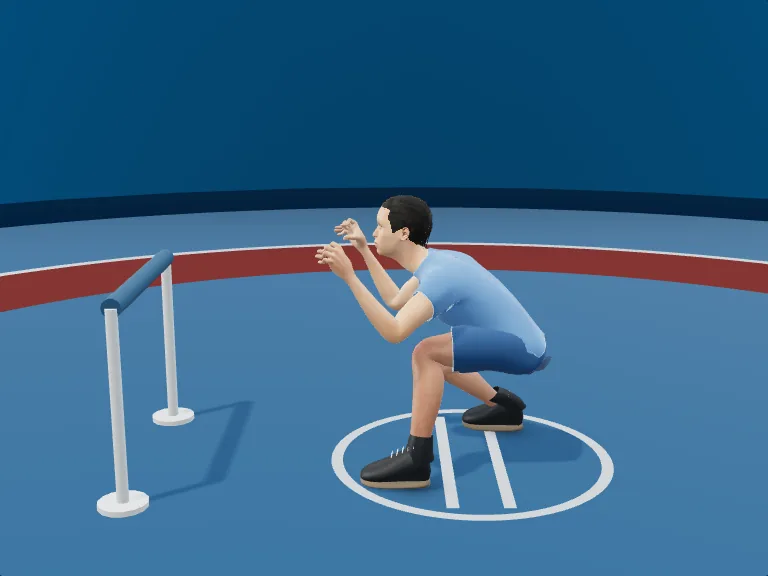
How do you drill a level change at home? Open the study below, watch the four phases at half speed from the side and from above, then put it on a board with work and rest times and run it on the room clock. All 36 studies, from the stance to the sit-out, work the same way. Everything you write stays in this browser.
A board to start from
07:30Stance, level and motion with generous resets.
- 01Stance / base check45s on, 30s off×2
- 02Level change / reset45s on, 30s off×2
- 03Stance / circle movement45s on, 30s off×2
Positions
Each study is a solo rehearsal of something a coach has already shown you. Pick the part of the match you want to work on, or follow the curriculum in order.
Stance
Movement
Ties
Entries
- Solo penetration stepOrder before speedOpen
- Single leg entry / head outsideHead outside, hands lowOpen
- High crotch entry / hand highHand at the hipOpen
- Double leg finish / drive throughThrough, not upOpen
- Duck under / level then angleLevel before the dipOpen
- Entry / circle movementRebuild the stanceOpen
- Penetration to finishThree beats, one shapeOpen
Defence
Mat
- Referee's position / bottom baseA base you can move fromOpen
- Hip lift shape / mat returnHips throughOpen
- Seated-to-standing baseComfortable supportOpen
- Stand / rebuild stanceDeliberate recoveryOpen
- Sit-out from the bottomLeg through, not aroundOpen
- Hip heist / turn to baseLift, then turnOpen
- Back bridge / shoulder supportedHips up, head off the loadOpen
Room notes
Nothing written down yet. After your next block, put one line here: the cue that finally made sense, or the question you want to ask at practice.
Write the first noteBefore you start
Folkstyle, freestyle or Greco-Roman?
The board works for any of the three because it only holds your own blocks, your own work and rest times and your own drill order. The studies are general movement. They say nothing about what scores, what is legal in your style or what your rulebook calls a stalemate; the rules primer under Reference says where the three differ.
Do I need a partner?
Almost every study needs nothing but a mat and space to move. Filter by equipment to see them on their own. The partner study is mirror footwork: no hands, no contact, no takedowns, and you swap who leads. The two-figure studies under Situational show a position with a second model; they are illustrations, not partner drills.
Can I write a whole practice on the board?
Up to 30 blocks, each with its own work time, rest time and repeat count. Drag the order around, save the board under a name and print a card to take to the wall. The three four-week boards print as a sheet with every week on it. What it will not do is decide the practice for you.